
The Golf Club of Tennessee (Upper), Tennessee
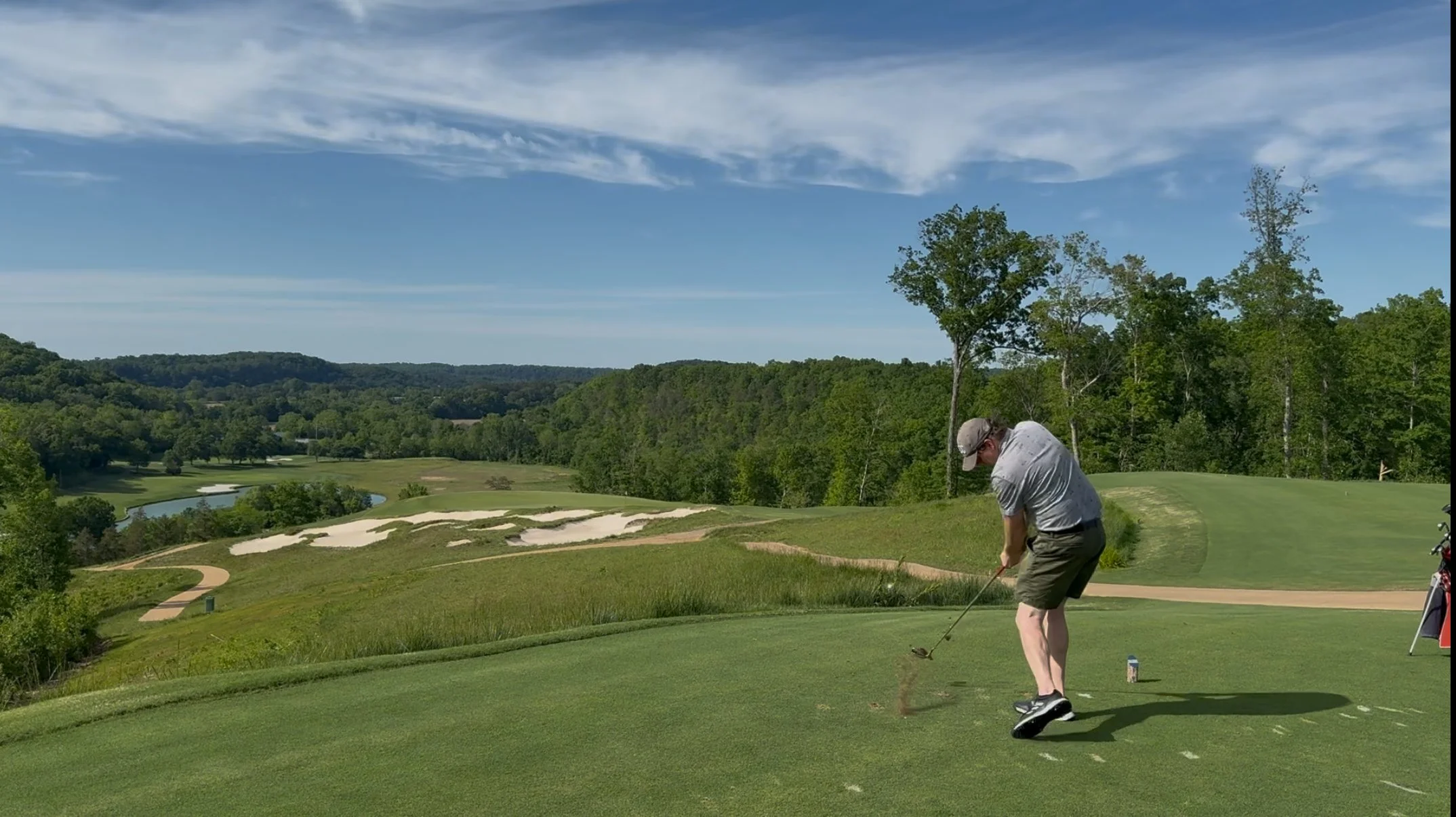
The par three seventeenth sports the best view at The Golf Club of Tennessee.
This spring, I traveled to Tennessee’s third largest city for a stellar multi-day event called the Knoxville Book Festival. The festival was full of talented authors and eager fans looking to get a signed copy of their next read. I also hosted a signing at a local Barnes & Noble and had a wonderful time interacting with members of the community. It was a very successful trip and one I hope to make again next year.
Of course, with the free time nestled in between the events and driving, I had to make time for the golf course. The trip took me through the Volunteer State—more specifically Nashville— and on Thursday afternoon I pulled into the Golf Club of Tennessee, intent on exploring their new routing called the Upper. The existing track, one that has stood pat as Tennessee’s second best course for a generation, has since been rebranded as the Lower. The club is located in a serene wooded forest just southwest of the city and has a rustic feel.
The golf scene in Tennessee, much like its largest city, is exploding. New clubs like Firefly and Bounty will surely add to the already loaded Nashville circuit. Down south, the Honors Course is unanimously considered the best course in the state. When one conjures up an image of Tennessee’s golf history, Tiger Woods’ 1996 NCAA triumph at the Honors Course is front and center. The most famous public layout in the Volunteer State is Sweetens Cove, a nine-hole beauty located outside of Chattanooga in the foothills of the Sequatchie Valley. Other notable Tennessee daily fee layouts include The Course at Sewanee and Fairfield Glade Resort’s Stonehenge and Heatherhurst Brae courses. Holston Hills, TPC Southwind, Spring Creek Ranch, and Nashville’s Troubadour Golf and Field Club comprise the rest of the state’s premier private clubs.
From the moment I arrived at the Golf Club of Tennessee, the entire staff at the club was welcoming and beyond accommodating for my visit. Dave, Luke, and my caddie Chris were top-notch folks. Every time I visit Tennessee I am blown away by the kind nature of its residents. The Southern hospitality stereotype is no farce.
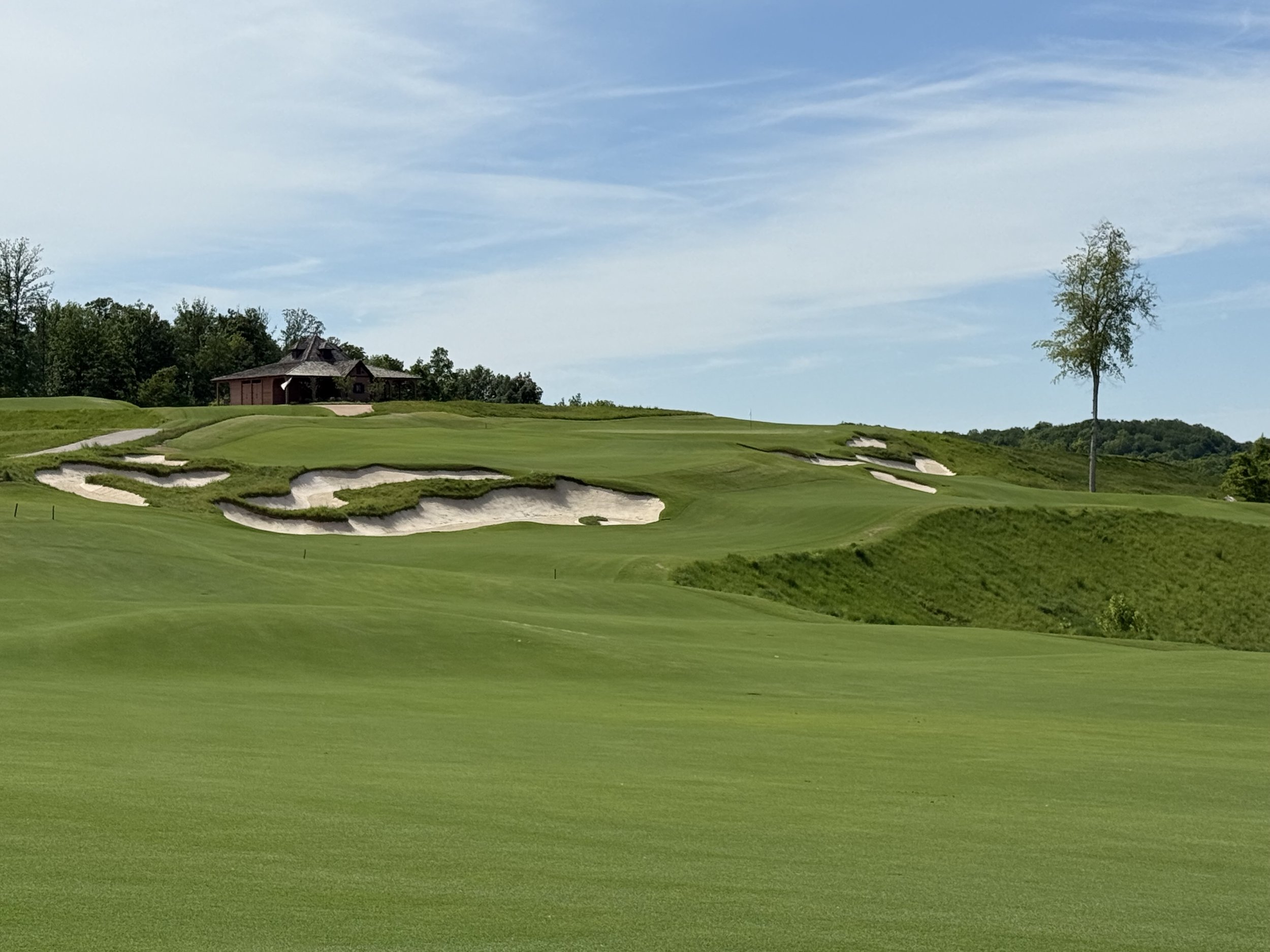
Much like the rest of the state, it is unfair to characterize the Upper’s diverse topography with a single word. Expansive views are present throughout the round, from the first tee to the final green. Almost every hole is lined with tall trees. Many holes play upward from the tee and back down to the green. It’s an interesting routing choice to some, but I wasn’t particularly fazed by the blind shots it demands. That said, I would say that employing a caddie or playing with an experienced member your first go around is necessary to score well. It’s a match play course to its core, meaning that birdies are there for the taking but so too are astronomical numbers. I shot several over my handicap but wasn’t necessarily upset with my play.
The Upper sports massive fairways, frilly-edged bunkers, and undulating greens. Gil Hanse’s 2024 creation is a par 72 that plays to 7250 yards from the tips. It reminded me quite a bit of The Loop at Forest Dunes in Michigan, a reversible course, in the way that it is raw, rugged, set in the woods, and packed with elevation changes. Like The Loop, I expect the Upper to grow into its routing more as time marches on.
My favorite hole on the first half of the routing had to be the 145-yard par three seventh. It’s a short, no-frills golf hole with punitive bunkers in front of and behind the big, sloping green. There’s something about a dirt path cutting through fescue toward a putting surface, towering trees dark in the distance behind it, that gets to me every time. I also enjoyed the par four fifth, a 315-yard creation that can be played a million ways. This is Hanse valuing imagination over sheer power.
The back nine plays quite differently than the front. The fourteenth is a 330-yard par four that plays a little longer than the number. There are several bunkers within reach for those who opt to hit driver. A ledge just shy of the green acts as a shield against those attempting to roll one onto the putting surface. Speaking of the green, you better hope the pin isn’t in the back so you don’t have to roll one down the distinct three tiers. Again, you shouldn’t play the Upper for the first time without the help of a member or caddie. The penultimate hole is a downhill beauty of a par three. The closing par five stretches 541 yards and looks a touch different from the rest of the Upper. The visual shift is noticeable but not unwelcome. The tee shot drops into a chute, and from there the second shot opens up with a litany of options. You can lay up left on a sliver of fairway, bail out right onto a wider patch of short grass and try your hand at the uphill approach, or you can attempt the nearly impossible task of carrying the creek that guards the green. All in all, the eighteenth is a fine closer.
The Upper is extremely penal, and the margins are razor thin. On the ninth, a par four, I smacked my approach to what I thought was a good place to be on the green, and thirty seconds later my Titleist rolled down a swale to the right in which I had no chance to get up and down. I don’t believe the Upper’s immaturity to be a problem at this point in its infancy. A wise man once told me a golf course needs a handful of years before it can be rightly judged.
When discussing elite thirty-six hole golf clubs in the southern United States, the Golf Club of Tennessee should be in the conversation. Everyone knows how special the original design is, and the Upper solidifies its place as a top tier club. I can’t wait to watch the course continue to develop and mature into the land. The Upper is a wild ride I’d wait in line to try again.